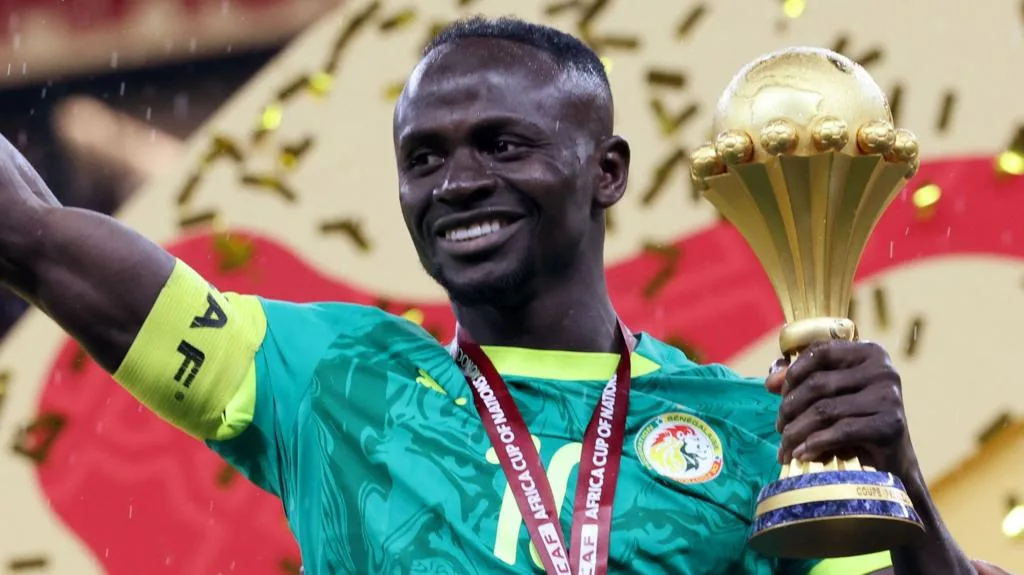
LONDON — The Confederation of African Football have reversed their shock decision to stage the Africa Cup of Nations every four years and will retain the tournament's traditional two-year cycle. President Patrice Motsepe said the U-turn was based on "advancing, protecting and promoting" the interests of the African game, 10 months after announcing the switch from 2028 on the eve of the 2025 finals in Morocco. Sadio Mane's Senegal won Afcon 2025 but the result was later overturned in favour of Morocco, and the Court of Arbitration for Sport will determine the ultimate destination of the title.
Afcon has developed into Caf's biggest revenue generator, with a profit of $114m (£85m) forecast for Afcon 2025, up from $75m (£56m) for the previous finals in Ivory Coast. "I think the general sentiment around the continent has been that the two-year cycle has served the continent very well," Football Association of Zambia official Sydney Mungala told the BBC. "The idea of pushing it to a four-year cycle was a bit of a surprise, maybe a concern, to the bulk of the African federations."


Afcon has predominantly been held every two years since its first edition in 1957, barring two three-year gaps in the 1960s and one year between the 2012 and 2013 tournaments. Motsepe said the shift to a four-year cycle was, in part, to help the global calendar "be significantly more synchronised and harmonised", after Afcon was staged midway through the European club season and led to recurring disputes over player release. Fifa general secretary Mattias Grafstrom was sitting aside Motsepe when the plan was announced, and critics highlighted that the change favoured football's world governing body. In its stead, an annual Africa Nations League involving all 54 countries was proposed, which Motsepe described as creating a "world-class competition every year".
The decision to move to a four-year cycle was taken at a meeting of Caf's executive committee last December - without being tabled at a general assembly where all member nations are represented. "These kinds of decisions should be put to the general assembly, they should be debated and discussed for months at a time," Algerian journalist Maher Mezahi told the BBC. "Afcon is the locomotive by which Caf funds all of its other competitions." Doubts were fuelled by the Africa Super League, announced in 2022 with projected annual revenues of $200m (£149m) and discontinued after just one edition. "We didn't proceed as quickly because the partners that were giving us money were not giving us the deals we thought we would be happy with," Motsepe said.
Fifa president Gianni Infantino first publicly proposed holding Afcon every four years in February 2020, an idea Motsepe rejected after he was elected as Caf president 13 months later. Infantino's drive to expand the Fifa World Cup to 48 teams has won him backing across the continent, but his position has been under threat since his plan to sell stakes in Fifa's competitions was leaked in July. "He came to Cape Verde to generate support, and, by and large, Africa gave him that support," Mezahi said of this month's strategy conference. "It shows that Africa is willing to assert its influence and look after its interests, even in the face of the global game's interest." The 2019 Afcon, won by Algeria, was hosted in June and July, but weather saw the 2021 and 2023 editions in a January-February slot while the 2025 Fifa Club World Cup pushed the 2025 finals to December. The reversal follows Caf's decision to restore the two-year cycle, which Motsepe said was in the "best interest of African football".